Resumes are inflated
Self-reported credentials reward polish, not performance.
Merit identifies true capability through AI-powered interviews, cognitive evaluation, and verified hiring signals — so companies can confidently hire the best people.
So why does this role appeal to you?
Tell me the high level reasons you were drawn to this role.
Traditional hiring systems reward credentials, polish, and connections instead of actual capability.
Self-reported credentials reward polish, not performance.
Pedigree predicts background, not the ability to execute.
Unstructured conversations vary widely between candidates.
Networks compound advantage and quietly exclude great people.
Without evaluation rubrics, gut feel decides who advances.
Capability hides behind noisy filters and surface-level proxies.
Merit evaluates demonstrated ability through structured AI interviews and layered candidate intelligence.
Merit conducts structured voice interviews that adapt to each candidate.
Communication, cognition, adaptability, and problem solving — measured.
Verified references and reputation signals confirm what candidates demonstrate.
Hiring teams receive candidate intelligence — not just resumes.
Conversational interviews, structured evaluation, and verified signals — surfaced as decision-ready intelligence.
Merit gives hiring teams decision-ready intelligence — and gives candidates a respectful, structured chance to demonstrate capability.
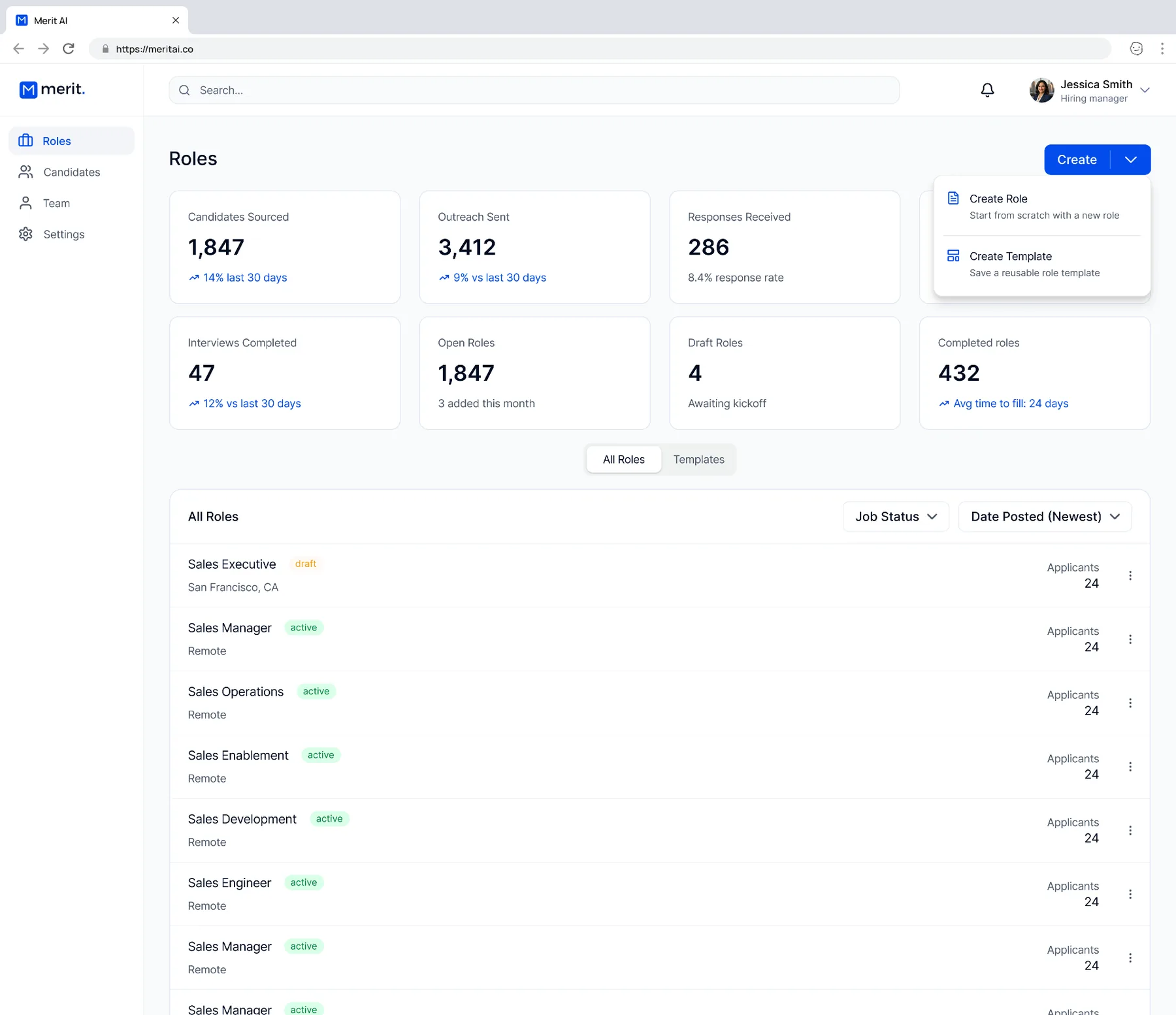
A single workspace for every requisition — with live pipeline metrics, response rates, and time-to-fill at a glance.
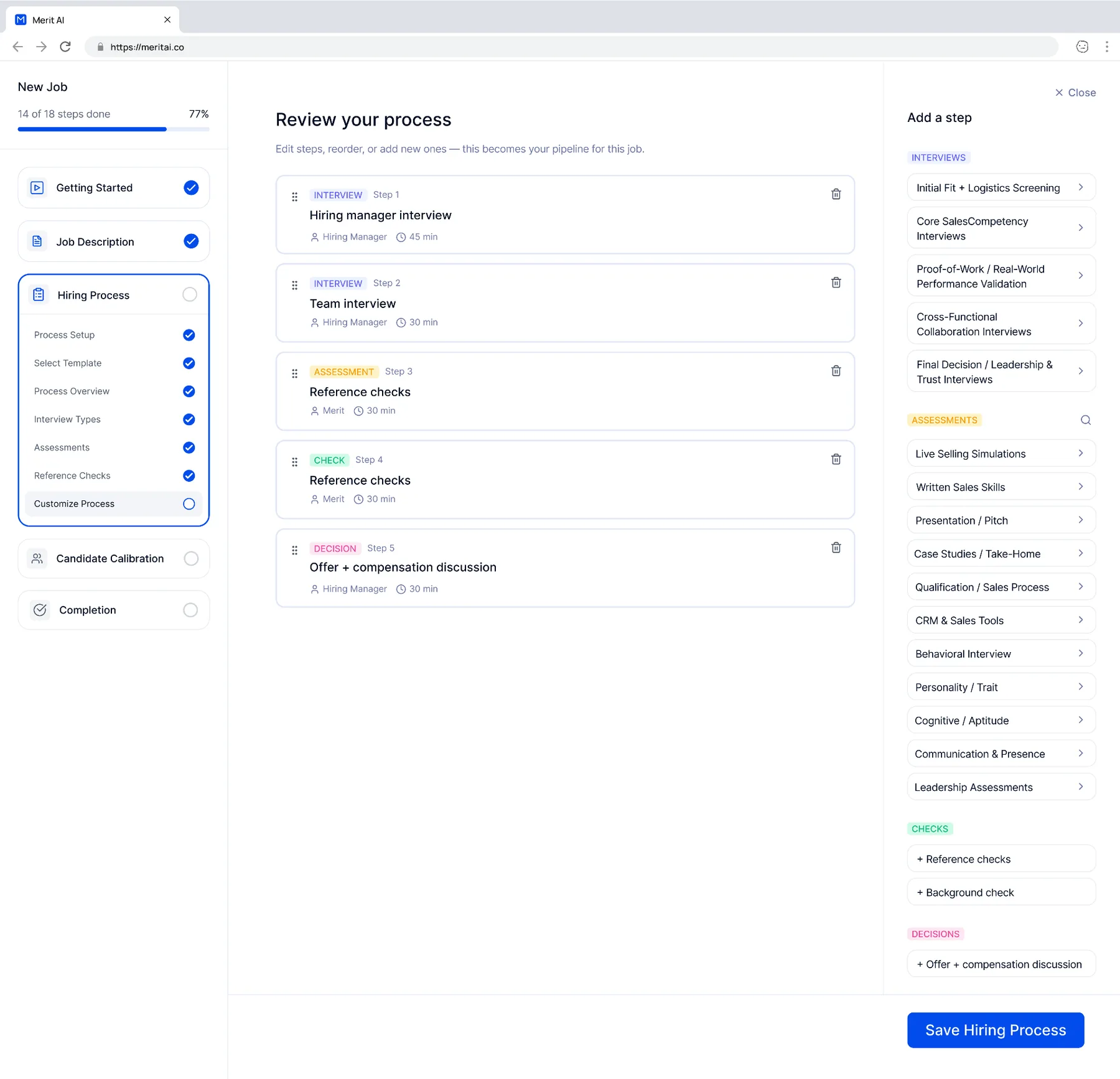
Assemble interviews, assessments, reference checks, and decision gates from a structured library — calibrated to the role.
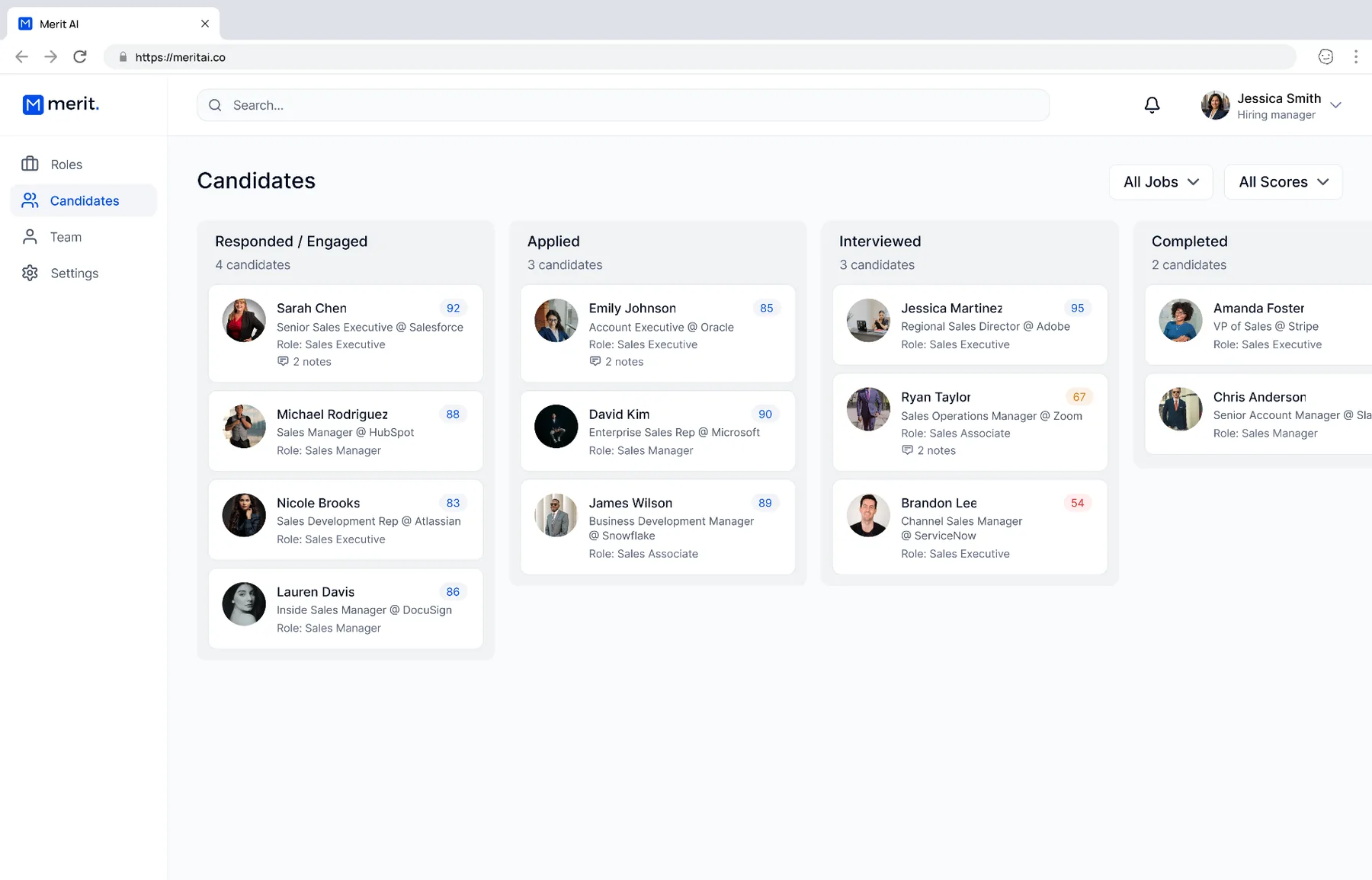
Every candidate carries a verified capability score — not a recency stamp. Move from stack of resumes to ranked field of ability.
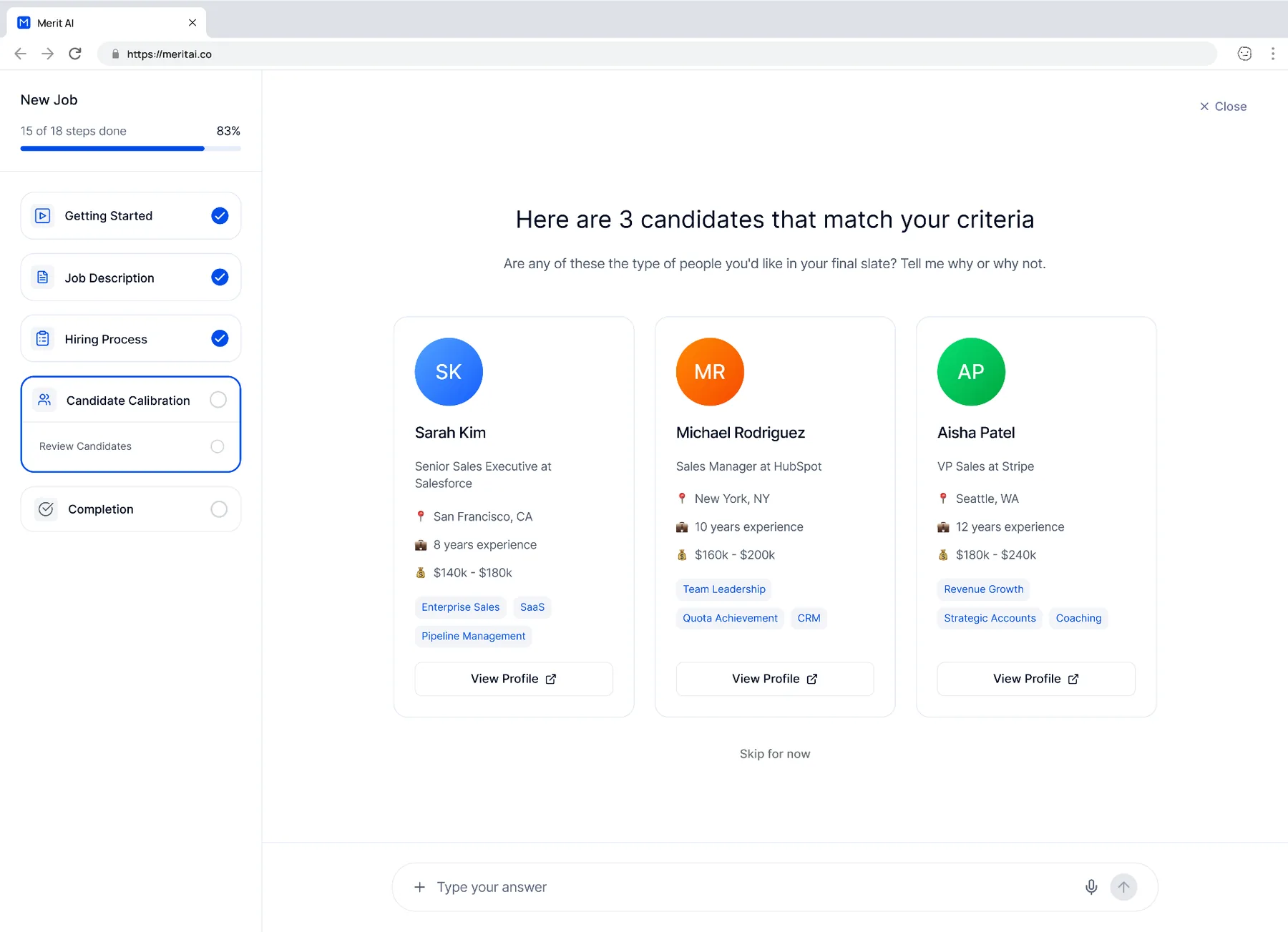
Merit surfaces a calibrated shortlist with the evidence behind every match — and lets you steer the model in plain language.
A calm conversational AI conducts structured voice interviews — extracting layered signal in real time.
How do you decide which deals deserve your top hours each week?
Take your time — Merit is listening.
Speech, semantics, and structure analyzed as the candidate speaks.
Competency evidence is tagged and weighted in the moment.
Merit remembers earlier answers and probes inconsistencies.
Every signal carries a confidence interval — never a black box.
Outcomes from teams hiring with Merit instead of resumes alone.
Reduction in resume inflation
Better quality of hire
Faster time to productivity
Improved interview consistency
Everything teams ask before adopting Merit as their hiring intelligence layer.
Merit is an AI hiring operating system that identifies true candidate capability through structured conversational AI interviews, cognitive evaluation, behavioral analysis, and verified hiring signals. Companies use Merit to hire based on demonstrated ability instead of resumes, pedigree, or referrals.
Merit conducts adaptive voice interviews and evaluates candidates across communication, cognition, adaptability, problem solving, and leadership. Every score is traceable to interview evidence and weighted by role-specific calibration.
No. Merit is a talent intelligence and candidate evaluation platform that integrates with your existing ATS. Merit provides the structured capability signal layer your ATS lacks.
Merit replaces unstructured conversations with consistent, role-calibrated interviews scored against explicit rubrics. By centering demonstrated ability over pedigree, network, or self-reported credentials, Merit reduces sources of systemic bias.
Merit layers multiple signal sources: conversational evidence from AI interviews, cognitive evaluation, behavioral analysis, and reference and reputation verification. Each signal carries a confidence score.
Traditional recruiting tools optimize workflow around resumes. Merit measures capability directly. The output is structured candidate intelligence — not a stack of documents.
Yes. Merit's structured AI interviews are designed to replace or augment first-round screens, delivering deeper, more consistent signal in less hiring-team time.
Merit surfaces evidence-backed capability scores across the dimensions that predict on-the-job success — so hiring decisions are made on what candidates can do, not on the polish of their resume.
Yes. Merit conducts structured, adaptive conversational AI interviews via voice — with real-time analysis, conversational memory, and confidence-scored signal extraction.
Merit produces a multi-dimensional capability score across communication, cognition, adaptability, problem solving, leadership, and role-specific competencies. Scores are explainable and auditable.
Merit is industry-agnostic and is currently used by teams hiring across sales, engineering, operations, customer success, and go-to-market functions.
Yes. Merit is built for enterprise — with SOC 2 readiness, SSO, RBAC, audit trails, encrypted interview data, explainable evaluations, and regional data residency.
Tell us a little about your hiring goals and our team will follow up with next steps.